
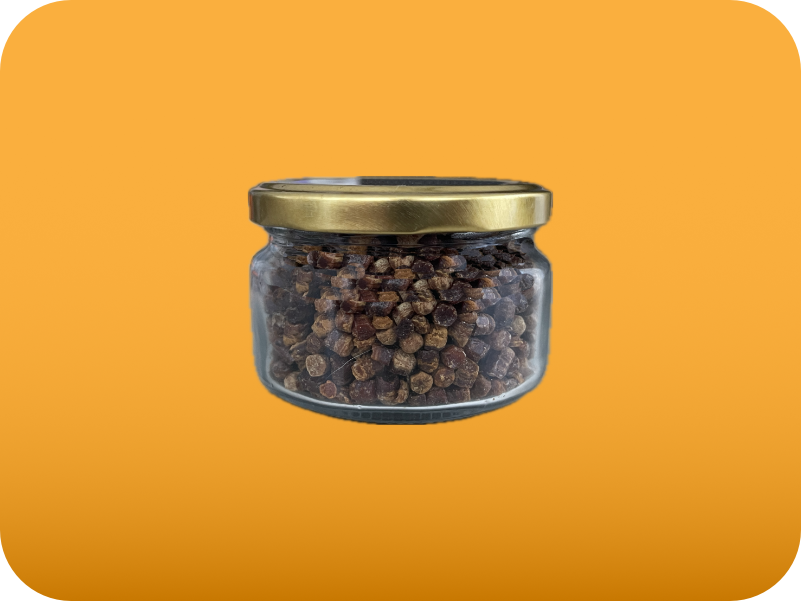
What is bee bread
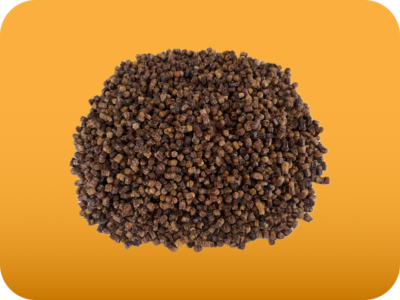
Bee bread is naturally fermented pollen stored in honeycomb cells. Bees mix the collected pollen with a small amount of honey and their own enzymes, and in the honeycomb it undergoes natural fermentation. This fermentation process lasts about two weeks, influenced by microorganisms, enzymes, as well as increased humidity and temperature inside the hive. As a result, bee bread is formed — one of the most valuable bee products.
How bee bread is made
Bees collect pollen from flowering plants and bring it back to the hive. In the hive, the pollen is placed into honeycomb cells, compacted, and covered with a thin layer of honey. During natural fermentation, the pollen matures and turns into bee bread.
How is bee bread harvested
Honeycombs containing bee bread are first frozen, so that the bee bread can separate more easily from the honeycomb cells during processing. After freezing, the honeycomb pieces with bee bread are threshed, cleaned, and dried. This process helps preserve the natural properties of bee bread.
How to use bee bread
Bee bread is usually consumed up to 20 g per day for adults, preferably in the morning. It can be eaten on its own or mixed with honey, yogurt, porridge, or other foods. Children older than 3 years can consume from a few granules up to about 10 g per day.
How to store
Bee bread should be stored in an airtight container, in a cool, dry place, protected from direct sunlight.
Atsiliepimai
There are no reviews yet.